Capability gating & upselling UX strategy for complex enterprise pricing & packaging
pattern design
leading without authority
product manager hat
Defined the short-term requirements, long term strategy , as well as UX pattern for how to gate and upsell capabilities that meet the various user needs and business needs across 3 editions x 4 system roles.
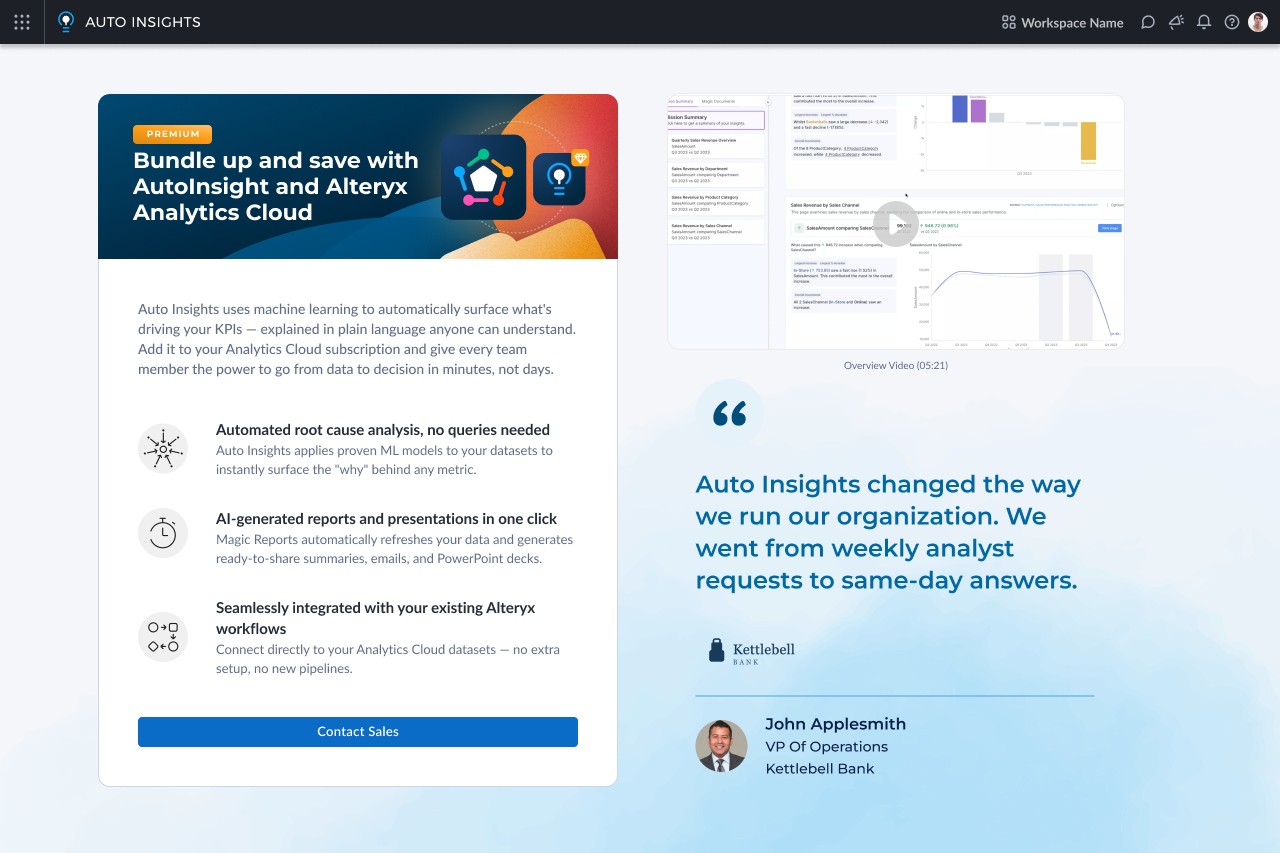
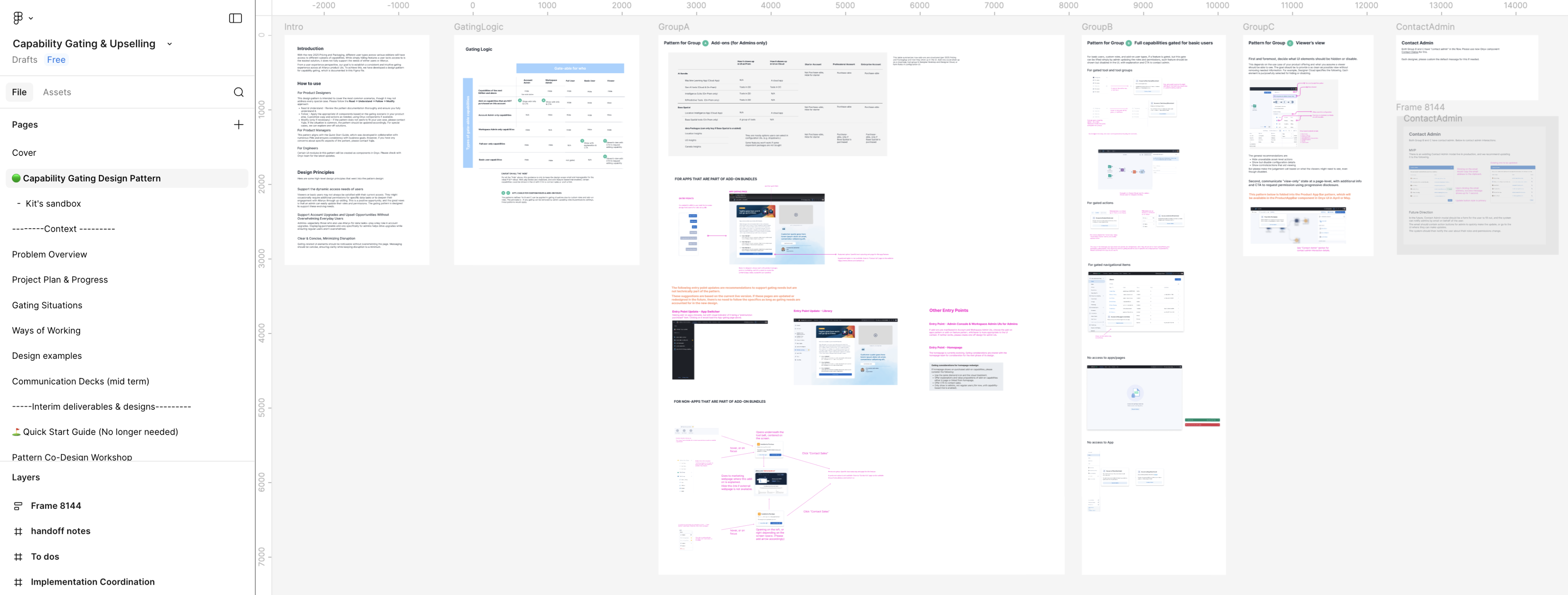
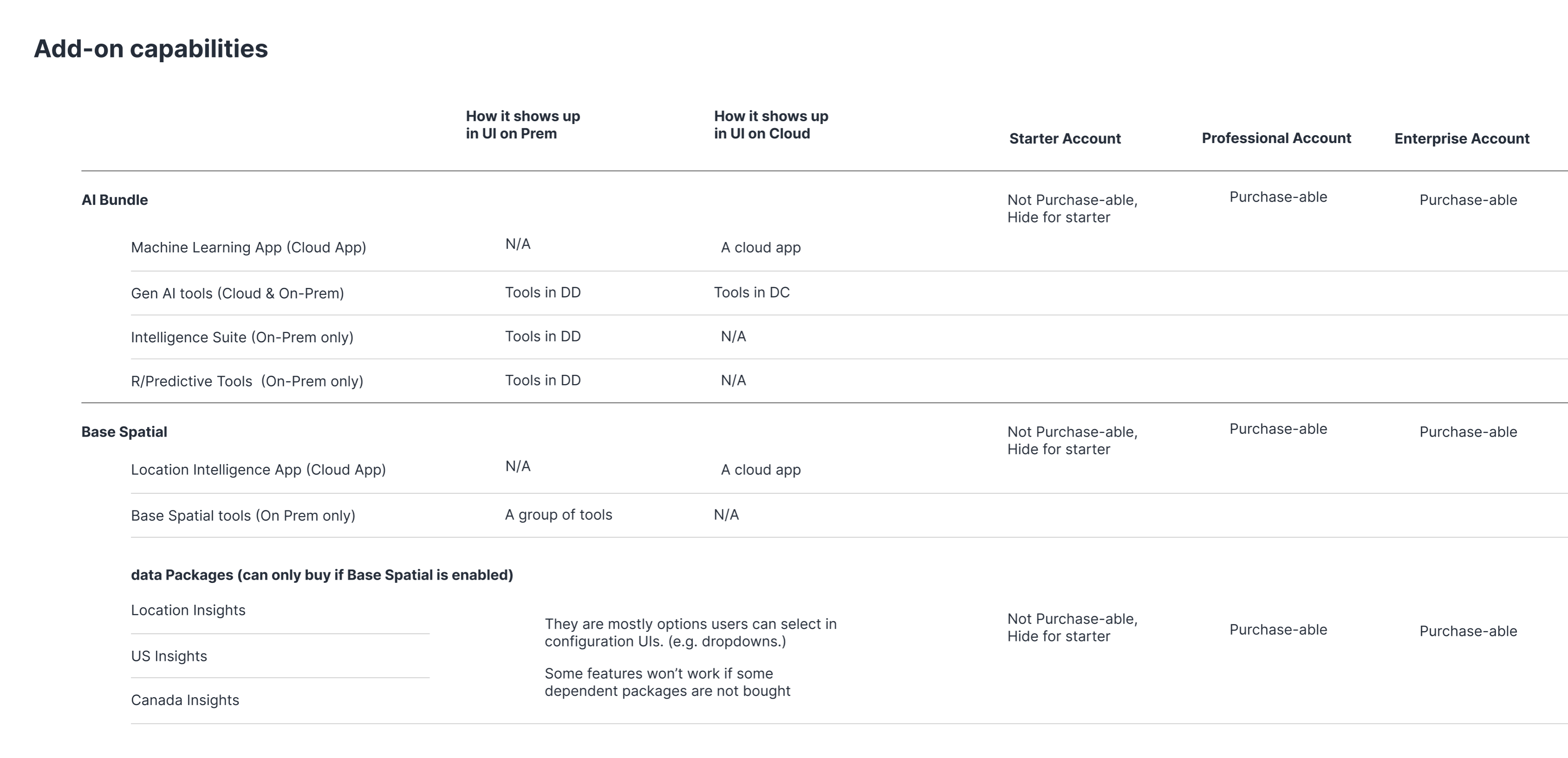
The pricing and packaging overhaul introduced different tiers and roles, which results in many users not having access to certain features due to lack of permissions. This new situation was not accounted for in pricing and pacakaging rollout,
My role
Team Lead, Architect
Worked with
4 product designers, 1 design system designer , 1 visual designer, 3 PM leaders, 1 design system engineer
Time
6 month, 2025
The problem & urgency
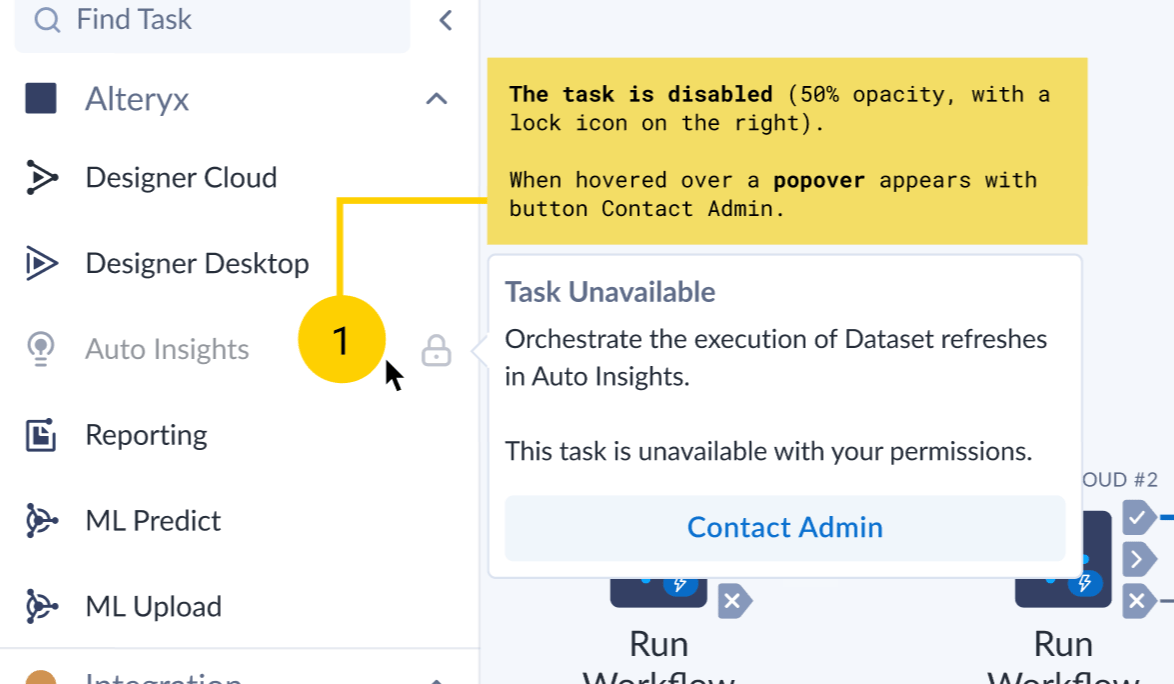
Inconsistent feature gating was creating organizational chaos and putting user trust at risk.
Alteryx Analytics cloud has a few cloud apps sitting on top of a platform, whereas Alteryx Designer is a desktop app for local data processing. Legacy customers on Designer don’t know how to use cloud, and new cloud users don’t take advantage of the power of Designer.
The challenge
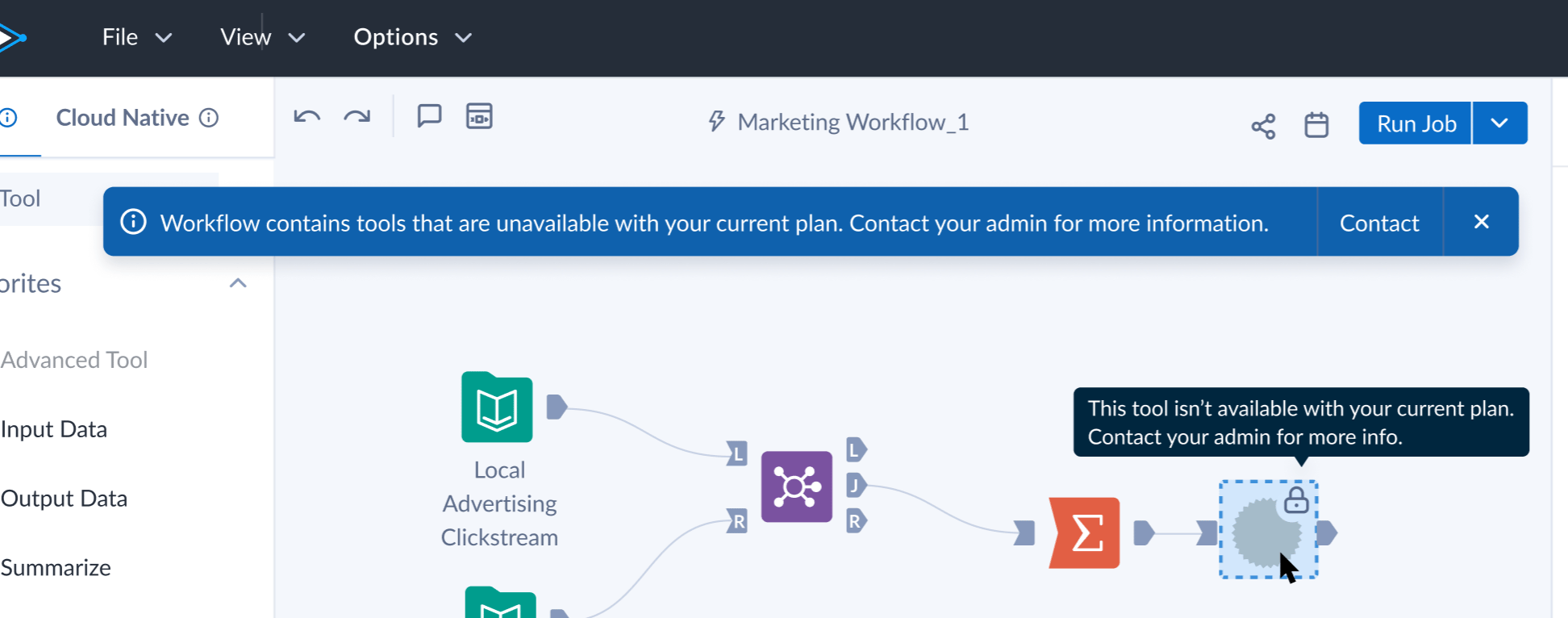
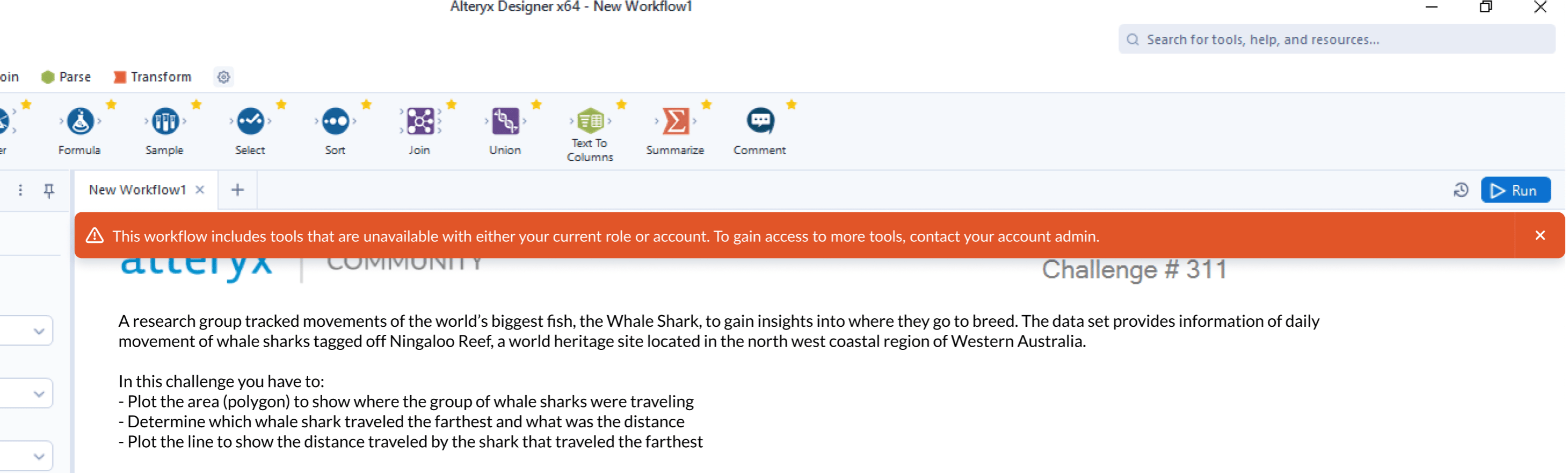
We need to define consistent gating behavior and gating UI pattern fast to ensure consistent experience for users without delaying the business critical pricing and packaging rollout.
The approach
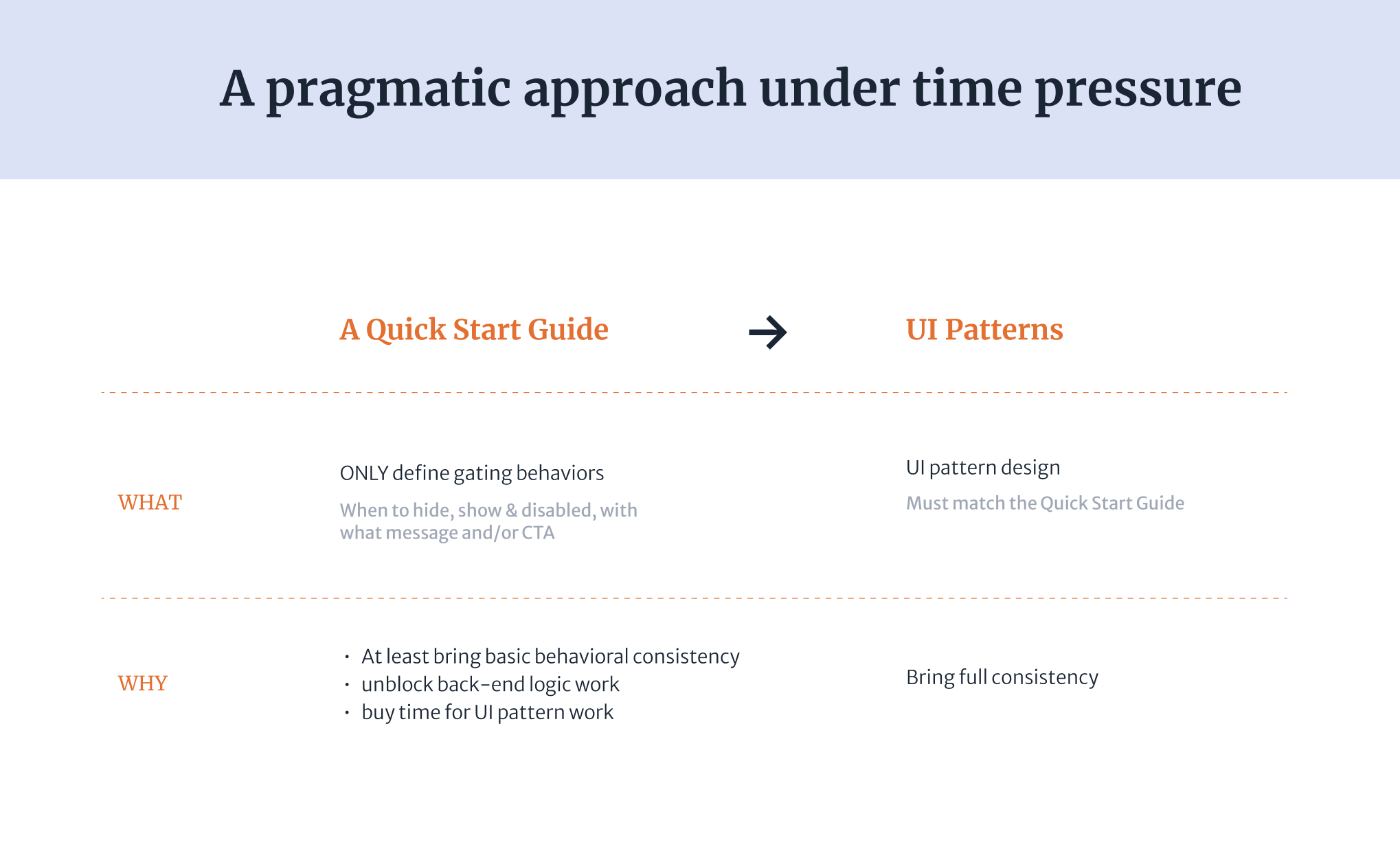
A two-phase solution to restore consistency without slowing teams down.
The approach starts with a Quick Start Guide — defining when features should be hidden, shown, or disabled — to establish baseline behavioral consistency and unblock back-end work immediately. This buys time for phase two: UI Patterns that translate those rules into fully consistent visual treatments across the product.
The research and insights
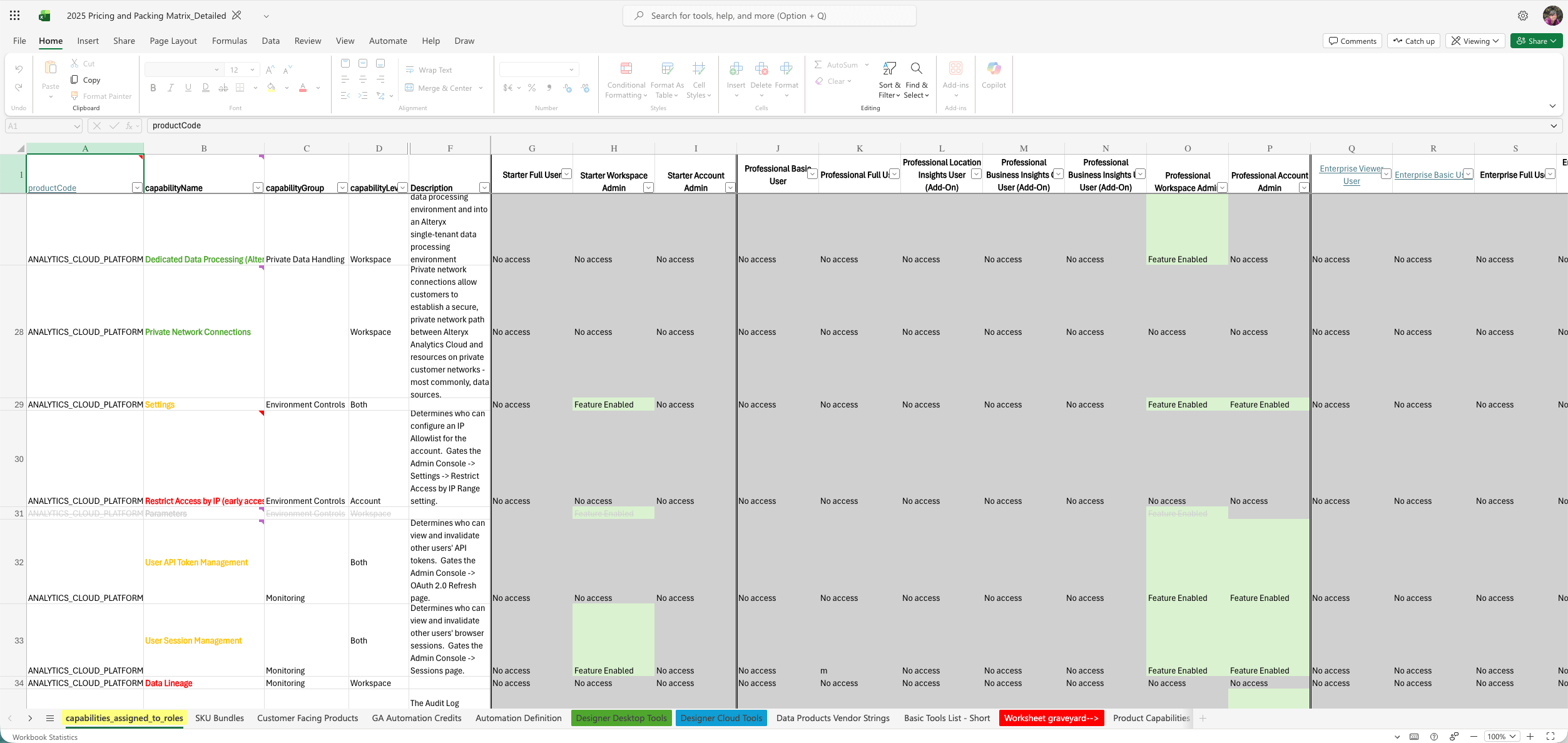
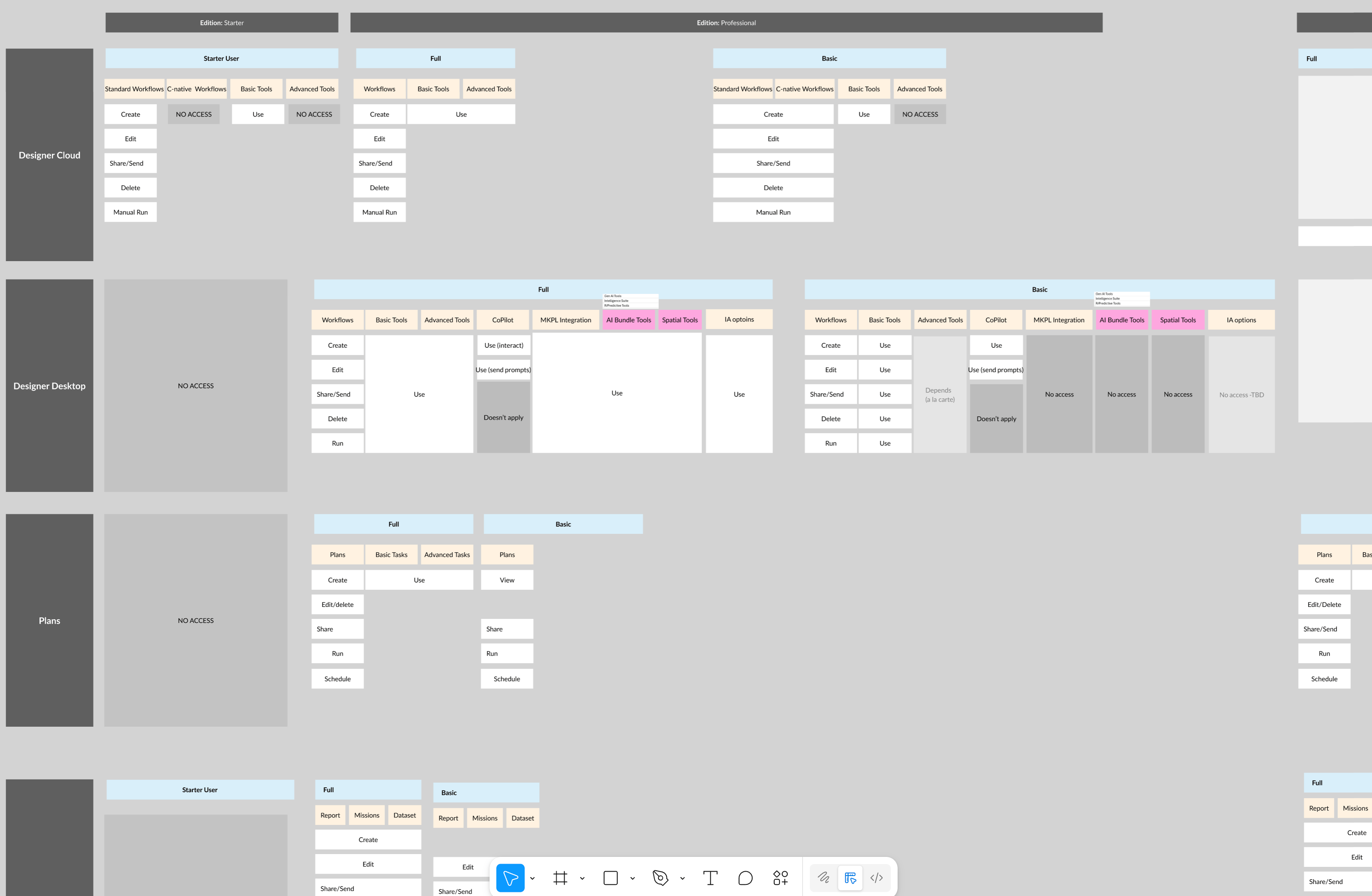
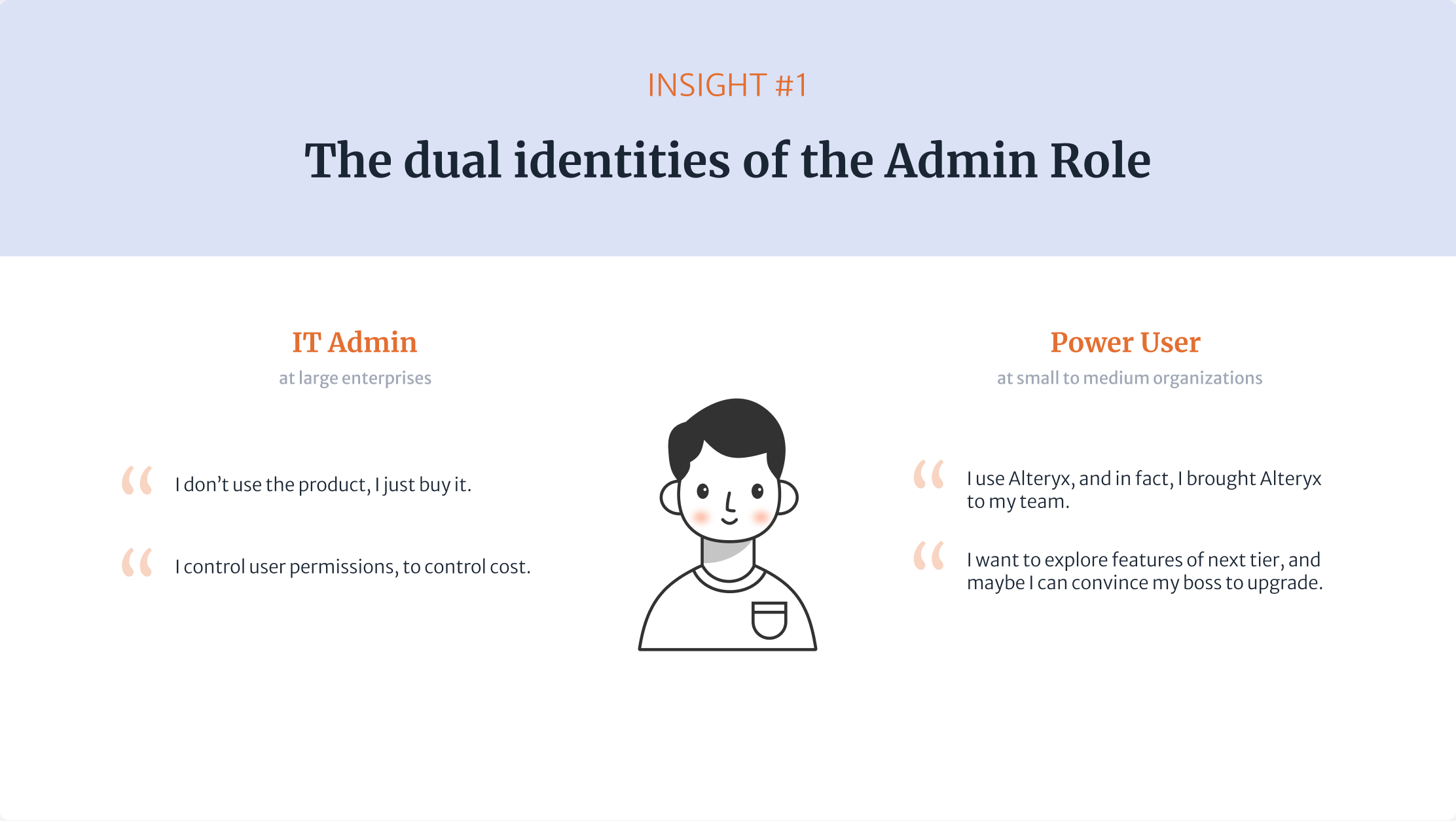
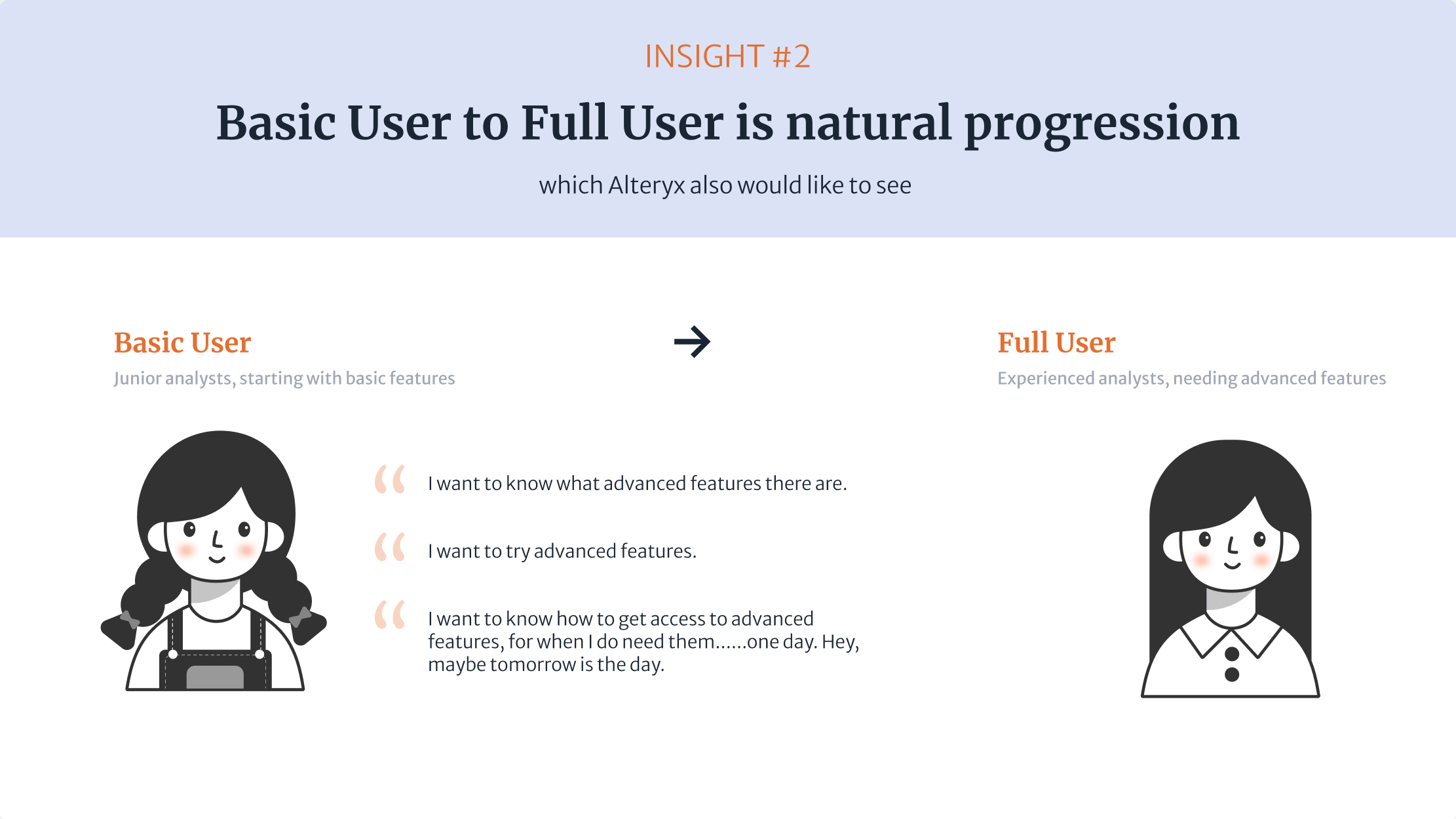
We learned that each user role carries a fundamentally different relationship with features — and gating design must reflect that.
Quick Start Guide was introduced , which translated insights into a cross-role gating framework adopted across teams.
Key solution #1
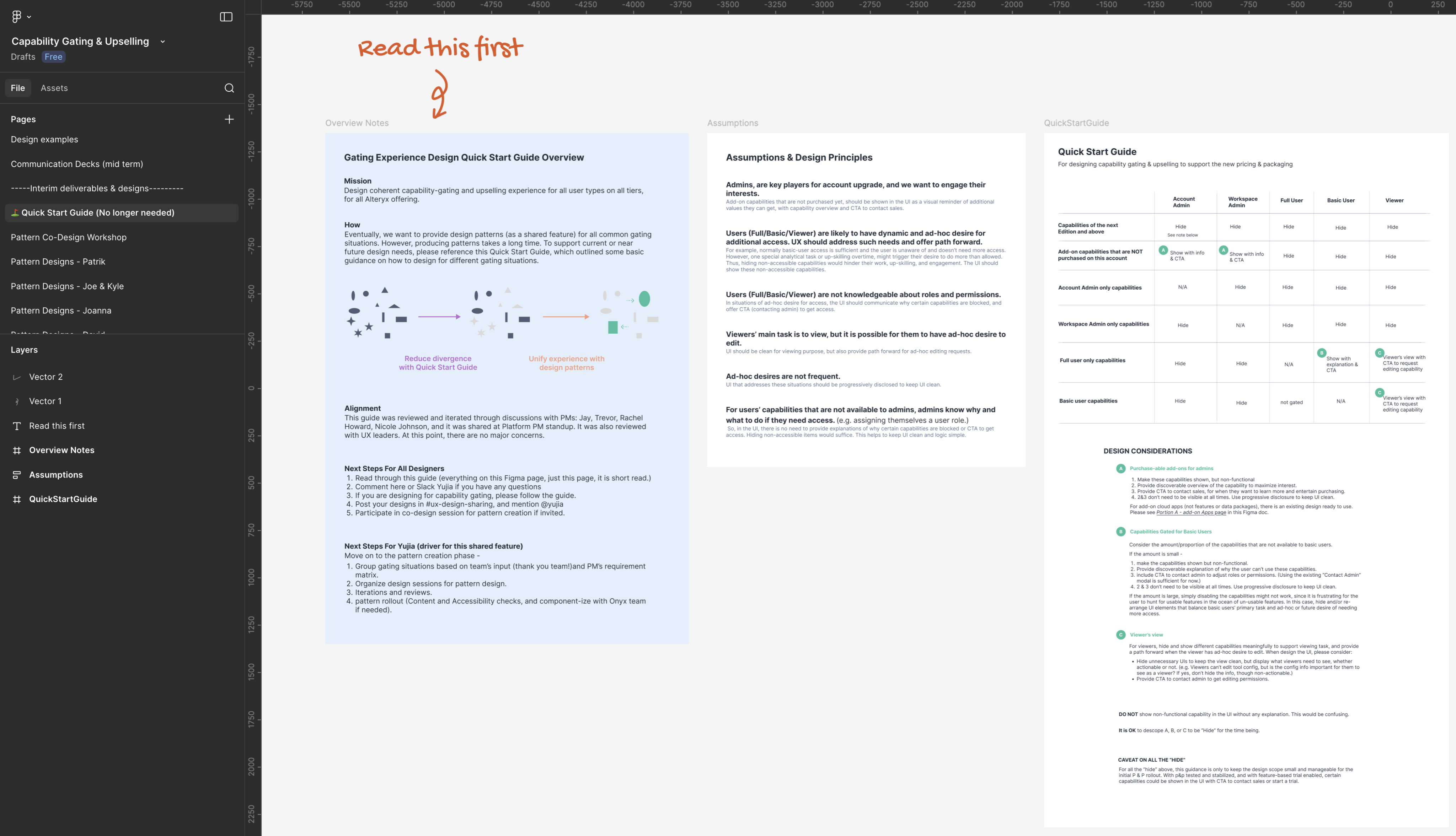
Quick Start Guide was introduced , which translated insights into a cross-role gating framework adopted across teams.
The Quick Start Guide defined behavioral logic for capability gating across all five user roles — when to hide, show, or surface features with context and CTAs. Co-developed with PMs and vetted with UX leadership, it reduced inconsistency across teams, unblocked back-end development, and laid the foundation for the full design pattern system to follow.
Key solution #1
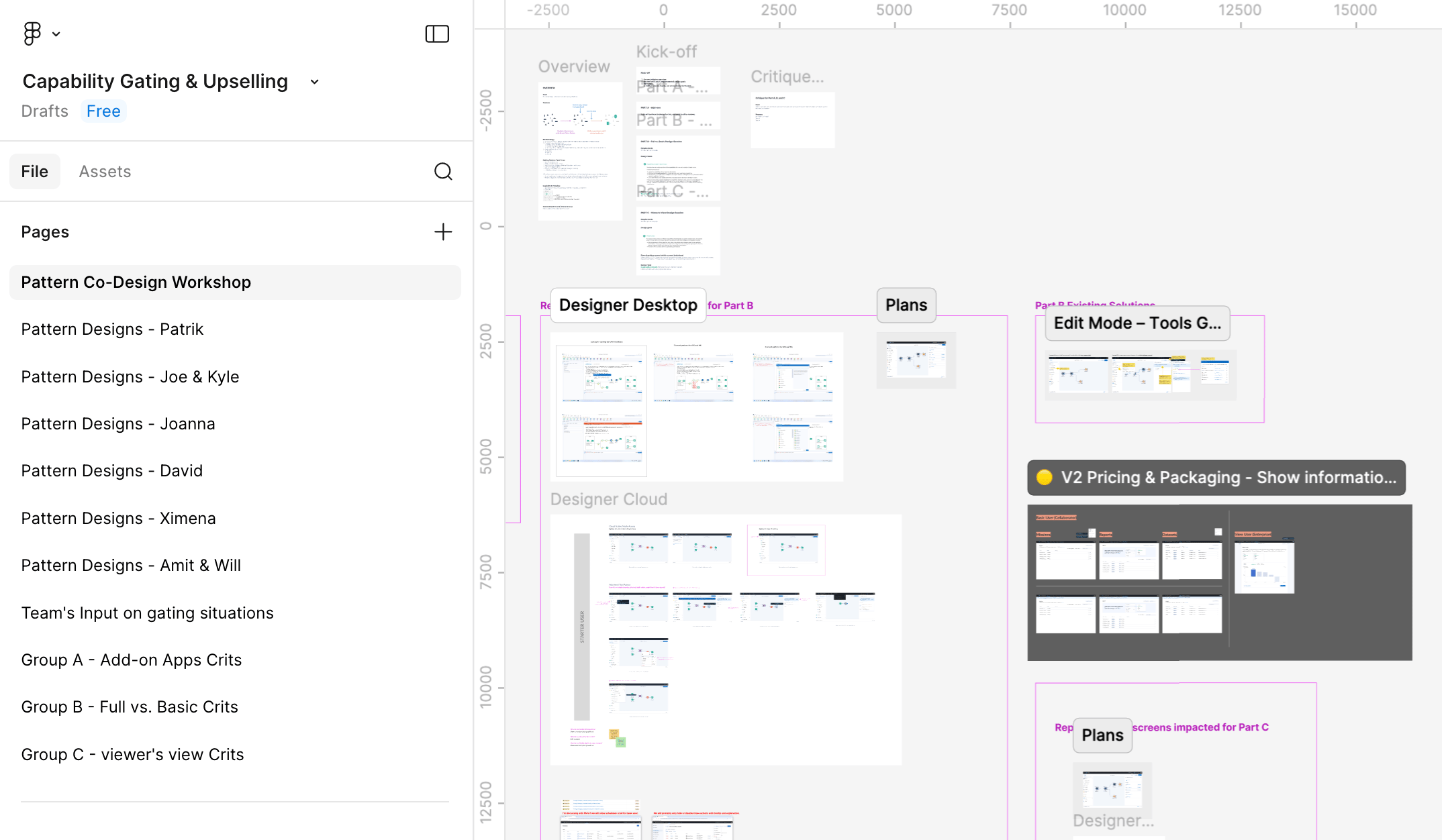
Unified existing solutions through workshops — building consistency and buy-in simultaneously
Rather than scrapping the half-built gating designs scattered across teams, the approach brought designers together across three continents in structured co-design sessions. By collectively evaluating existing solutions, weighing tradeoffs, and co-authoring the final patterns, every designer developed firsthand understanding of the rationale behind each decision. This made adoption nearly frictionless — the team wasn't handed a spec to follow, they built the standard themselves.
Outcome & Impact
Delivered a comprehensive, role-based gating pattern system that rolled out without a single implementation issue — and has held up through multiple pricing & packaging adjustments since.
The final pattern library covered all gating scenarios across every user role, documented clearly enough that implementation required zero back-and-forth. Its behavior-first design proved resilient too — as pricing and packaging shifted multiple times after the May 2025 launch, the patterns adapted without needing redesign, validating the scalability of the system from the ground up.